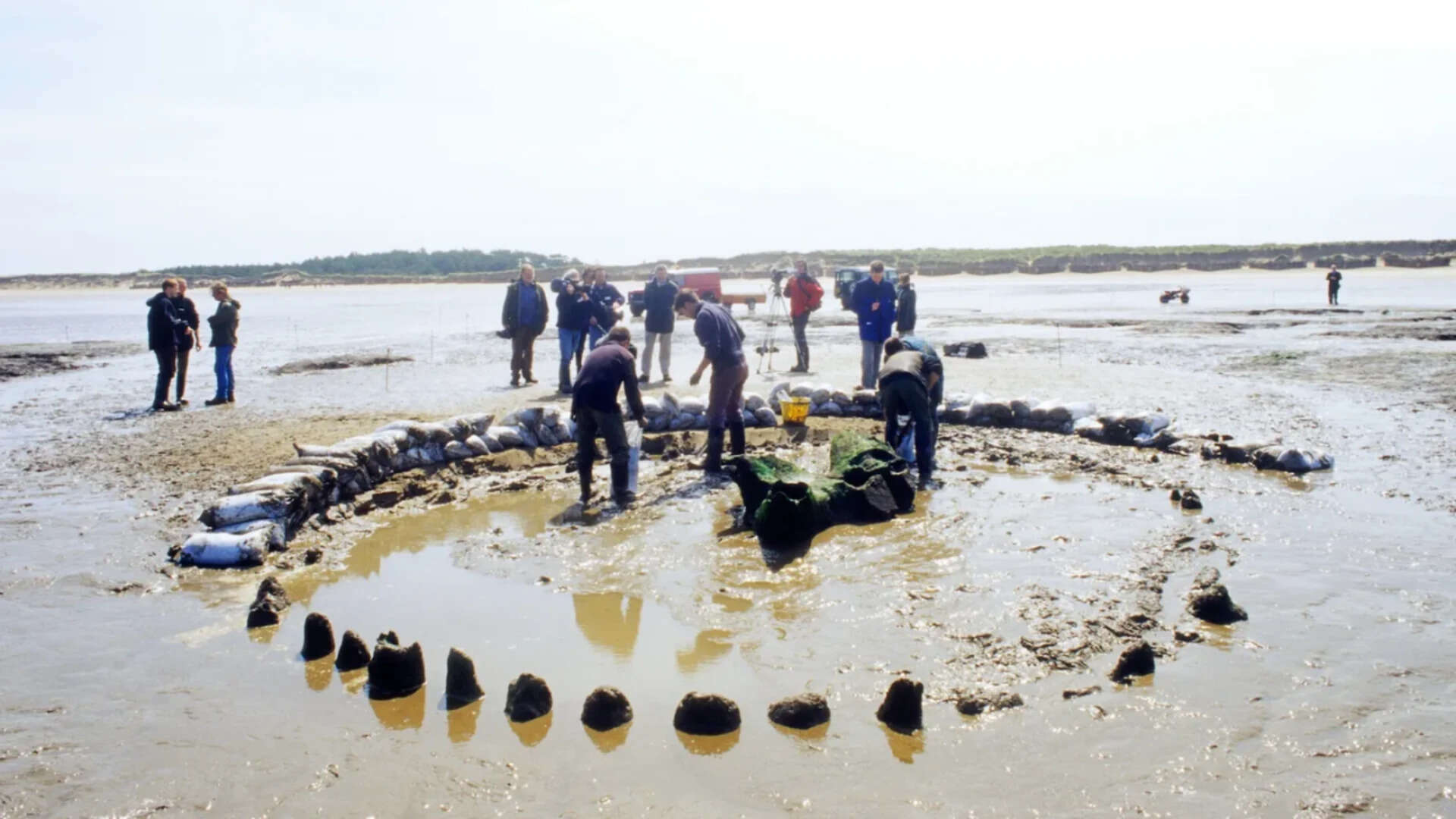
A study suggests Seahenge, a 4,000-year-old timber circle on Norfolk's coast, was built to combat cold and prolong summer through ritual. Archaeologist David Nance links the structure to climate adaptation, blending mythology and climate evidence. The theory redefines Seahenge beyond burial grounds, emphasizing its environmental purpose.
A study suggests Seahenge, a 4,000-year-old timber circle on Norfolk's coast, was built to combat cold and prolong summer through ritual. Archaeologist David Nance links the structure to climate adaptation, blending mythology and climate evidence. The theory redefines Seahenge beyond burial grounds, emphasizing its environmental purpose.